

Umbrella Project VI
Synthesis of Bioactive Cannabinoids
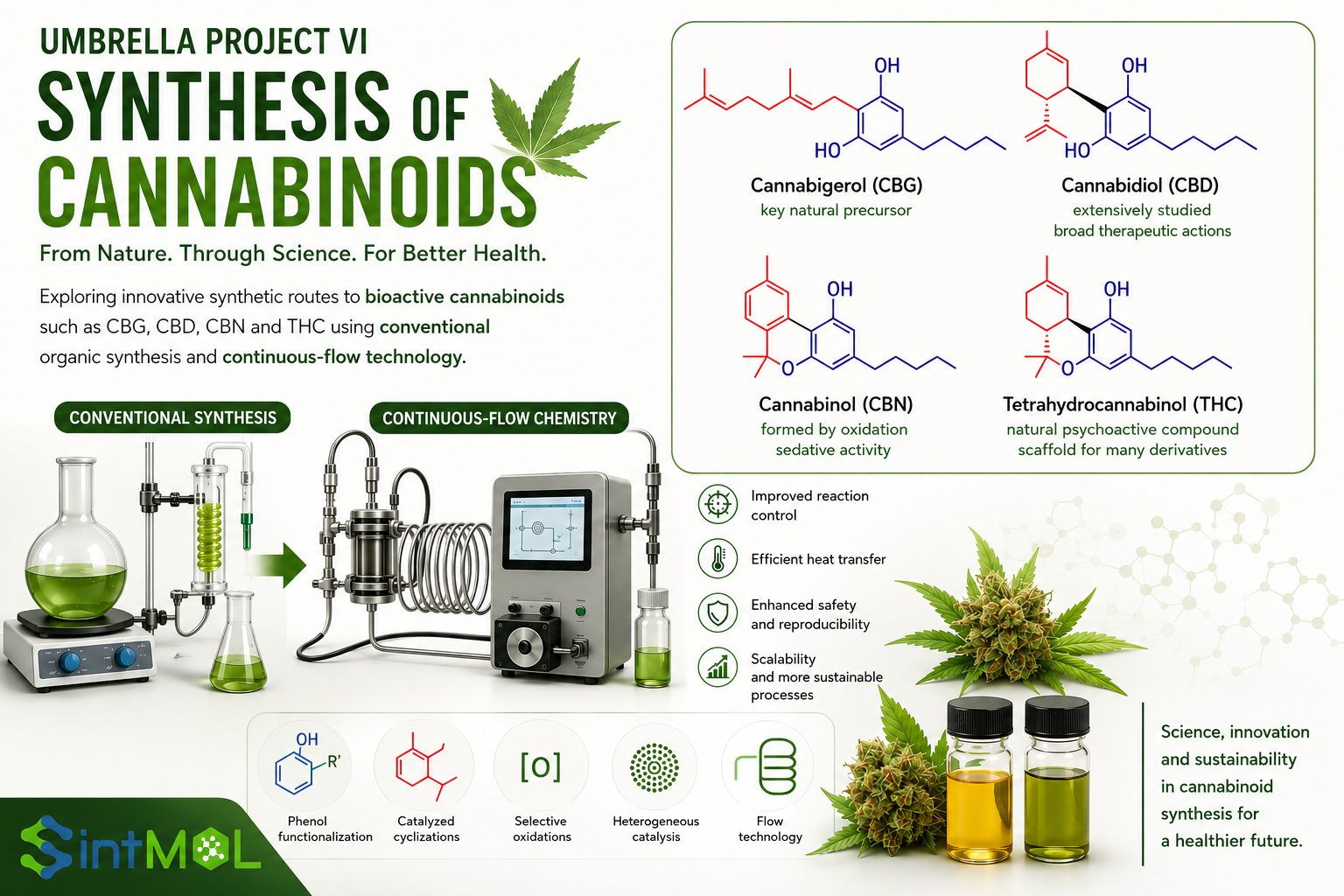
The synthesis of cannabinoids such as cannabigerol (CBG), cannabidiol (CBD), and cannabinol (CBN) has emerged as a strategically important research area in medicinal chemistry, organic synthesis, and biotechnology due to the broad spectrum of biological activities associated with these compounds. Within this project, synthetic methodologies are investigated using both conventional batch organic synthesis and modern continuous-flow approaches, aiming at the efficient, scalable, and selective preparation of natural and non-natural cannabinoids. Particular emphasis is placed on the development of sustainable and reproducible synthetic routes, including acid-catalyzed cyclizations, selective oxidations, terpene functionalization, and derivatization strategies designed to access structurally diverse cannabinoid analogues with potential pharmacological applications. CBG, for instance, has shown potent antimicrobial activity against Staphylococcus aureus.
In parallel, continuous-flow chemistry is explored as an advanced platform for cannabinoid synthesis and transformation, offering improved reaction control, enhanced heat and mass transfer, safer handling of reactive intermediates, and facile scalability. Flow-based methodologies are especially attractive for cannabinoid chemistry because they allow precise control over reaction parameters that strongly influence regioselectivity, stereoselectivity, and product distribution. Current investigations include the synthesis of cannabinoids from renewable phenolic precursors, catalytic transformations using heterogeneous solid supports, oxidative conversion of tetrahydrocannabinol-related substrates into CBN-enriched mixtures, and the development of intensified synthetic processes aligned with green chemistry principles. These studies aim to integrate synthetic organic chemistry, process chemistry, and medicinal chemistry toward the discovery and production of bioactive cannabinoid derivatives with pharmaceutical and biotechnological relevance.