
Umbrella Project V
Molecular Bioprospection and Production of Antibiotics
Molecular bioprospection
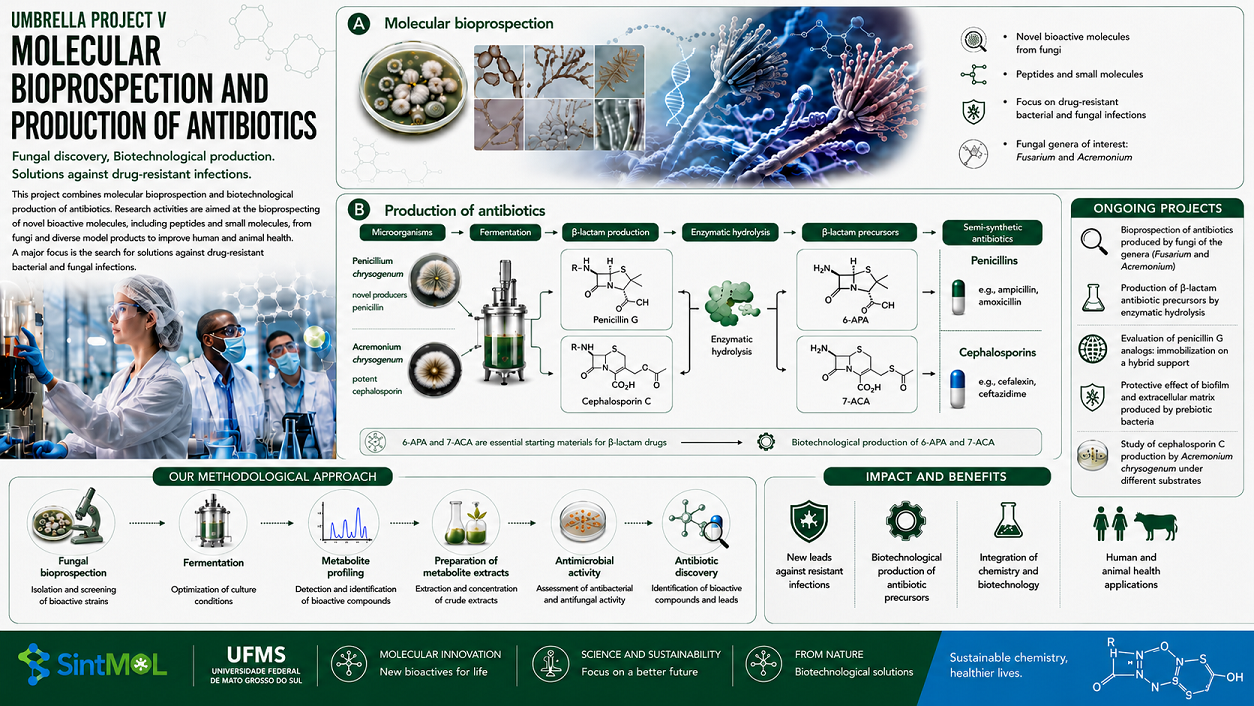
The research activities are aimed at the bioprospecting of novel bioactive molecules (peptides and small molecules) from fungi and value-added products for providing better human and animal health. The focus is mainly on finding the solutions for drug-resistant infections (bacterial and fungal).
Production of antibiotics
Antibiotic production by microorganisms is one of their more interesting features, particularly from a medical and commercial perspective. Penicillins and cephalosporins belong to the class of drugs known as β-lactams. Penicillium chrysogenum naturally produces penicillins, which we classify as 1st generation. The 2nd, 3rd, and 4th generations are all semi-synthetic, obtained from chemical synthesis starting from 6-APA. The cephalosporins used in medicine are modified versions of 7-ACA, which come from cephalosporin C made by the fungus Acremonium chrysogenum. Semi-synthetic penicillins and cephalosporins continue to interest many research groups to discover new antibiotics that may tackle super bacteria. 6-APA and 7-ACA are essential starting materials used in studies on the synthesis of the β-lactam drugs. We are interested in producing 6-APA and 7-ACA using biotechnological processes.
Ongoing Projects
• Bioprospecting of antibiotics produced by fungi of the genera Fusarium and Acremonium.
• Production of β-lactam antibiotic precursors by enzymatic hydrolysis.
• Evaluation of penicillin G acylase immobilization on a hybrid support.
• Protective effect of biofilm and metabolite profile produced by probiotic bacteria.
• Study of cephalosporin C production by Acremonium chrysogenum using different substrates.