
CIBSint Receives New High-Resolution Mass Spectrometer
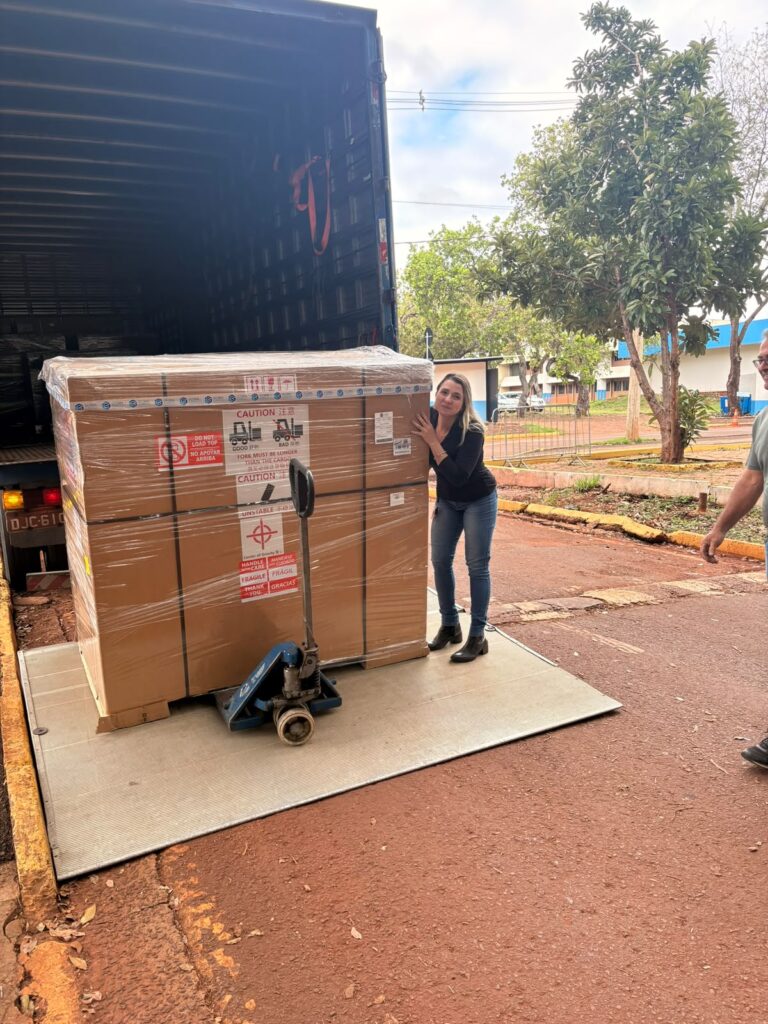
Equipment acquired with funding from FINEP expands UFMS research infrastructure for organic synthesis, natural products, bioprospecting, and omics sciences
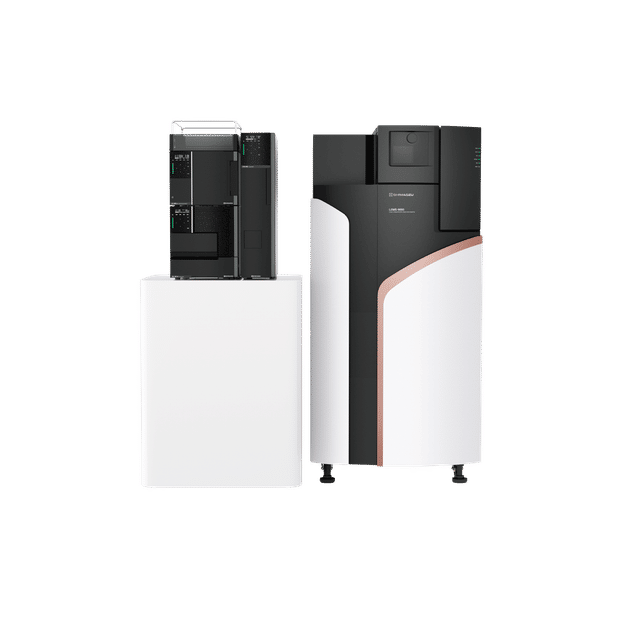
The Center for Research and Innovation in Bioprospecting and Synthesis of Products for Human and Animal Health (CIBSint-INQUI) at the Federal University of Mato Grosso do Sul (UFMS) has received a Shimadzu LCMS-9050 Q-TOF high-resolution mass spectrometer. The equipment was acquired with funding from the MCTI/FINEP/FNDCT Thematic Centers 2023 Public Call, following approval of the CIBSINT project. This thematic project is coordinated by Prof. Maria Ligia Macedo (FACFAN) and Prof. Adilson Beatriz (INQUI).
The new infrastructure will significantly expand the Institute of Chemistry’s analytical capabilities in research areas such as organic synthesis, medicinal chemistry, natural products, bioprospecting, metabolomics, lipidomics, and other omics-based approaches.
Advanced Technology for Complex Analyses
The LCMS-9050 combines liquid chromatography with high-resolution quadrupole time-of-flight mass spectrometry, known as Q-TOF. This technology enables highly accurate molecular mass determination, structural information through fragmentation experiments, and the analysis of complex chemical samples.
In organic synthesis and medicinal chemistry, the instrument can be used to confirm the identity of synthesized molecules and investigate reaction intermediates, products, and impurities. In natural products research and bioprospecting, it will expand the capacity for detailed chemical characterization of extracts obtained from plants, fungi, bacteria, and other organisms.
The system will also play an important role in metabolomics and lipidomics studies, which require the detection and comparison of large numbers of metabolites present in biological systems.
Pantanal and Cerrado Biodiversity
According to Professor Adilson Beatriz, Coordinator of CIBSint, the incorporation of this instrument represents a strategic advance for research conducted at UFMS and for the investigation of Mato Grosso do Sul’s biodiversity.
“The LCMS-9050 provides our researchers with a state-of-the-art analytical platform capable of supporting activities ranging from the synthesis and characterization of new molecules to advanced metabolomics and bioprospecting studies. For Mato Grosso do Sul, this is particularly important because we are located in a region that encompasses two extraordinary biodiversity-rich biomes, the Pantanal and the Cerrado. Understanding this biodiversity at the molecular level, identifying new metabolites, and transforming this knowledge into innovation requires cutting-edge scientific infrastructure,” he says.
Regional biodiversity is one of CIBSINT’s main research areas. Plants and microorganisms associated with the Pantanal and Cerrado biomes can produce a vast diversity of metabolites, many of which remain poorly investigated and may have potential applications in health, biotechnology, and agriculture.
According to Dr. Beatriz, the new infrastructure will allow a greater proportion of these studies to be carried out directly at the University.
“The greater our ability to understand the chemical composition and metabolism of organisms from the Pantanal and Cerrado, the greater the opportunities to transform scientific knowledge into new products, processes, and technologies. This instrument significantly expands our ability to conduct this type of research within UFMS,” he emphasizes.
Multiuser Research Infrastructure
 The LCMS-9050 will support projects developed within CIBSint and will also be available to other UFMS research groups and collaborating institutions. The aim is to strengthen the multiuser and interdisciplinary nature of the infrastructure, encouraging cooperative projects and new academic and technological partnerships.
The instrument will train undergraduate and graduate students, researchers, and technical staff while fostering collaborative projects with Brazilian and international institutions and companies.
For the CIBSint coordinator, investments of this scale have a direct impact on the university’s scientific capacity.
“Scientific infrastructure of this level changes the research capabilities of an institution. It allows us to address questions that previously required samples to be sent to other research centers, accelerates projects, supports the training of highly qualified human resources, and creates new opportunities for collaboration. It is an investment that will have long-term impacts on the science produced at UFMS and in Mato Grosso do Sul,” Dr. Beatriz highlights.
Investment in Research and Innovation
The acquisition of the instrument is part of the “CIBSINT” project approved under the MCTI/FINEP/FNDCT Thematic Centers 2023 Public Call, an initiative aimed at strengthening and expanding national research centers equipped with advanced scientific infrastructure.
With the arrival of the LCMS-9050, CIBSint further expands its capacity to integrate chemical synthesis, bioprospecting, biodiversity, biotechnology, and omics sciences, strengthening research focused on the discovery and development of molecules, biomolecules, and technologies of interest to human and animal health, agriculture, and other strategic areas.
This text was enhanced using AI.